четверг, 2 октября 2014 г.

Pre & Post-Run Nutrition – What & When to Eat For Maximum Running Performance

Pre & Post-Run Nutrition – What & When to Eat For Maximum Running Performance

As a runner, chances you already know what you should eat and when you should eat it.


But that’s easier said than done—the real trick is really about turning the theory into practice.


Nonetheless, fret no more.


Today I’m gonna share with you some of my best diet advice. This, hopefully, will help you get your head around the ins and outs of proper running nutrition so you could run your best and reach your full running potential.


So you are excited? Then here we go…


Have a Plan


Failing to plan is planning to fail, as the saying goes. And this classic management maxim is so relevant and important in the world of running.


Here is why…


When it comes to the ideal meal-timing, the better you plan, the better off you are going to be.


Therefore, to take the guess work out of your eating choices, make sure to plan the snacks and meals you are going to eat before and after the run.


And if you don’t know how, then use these guidelines as your mapping tool.


So find out what works the best for you and stick to it.


The following eating strategies will help you coordinate your meals with your running schedule, based on the time of day you run.


Pre & Post-Run Nutrition Rules

Usually, for short easy runs, you won’t need to worry about energy intake.


On the other hand, if you are planning to run for more than an hour, or go for a hard interval session, then you should be doing your best to maximize your eating choices. (Check my other post: The 3 Keys to Pre- and Post-Run Eating for Runners)


The amount of fuel you need depends on how long and/or hard you are going to run.


Here are a few pointers:


1. Morning Runners


I’m a morning runner, and truth be told, I wasn’t born a morning person. And diet was one of those things that took me quit a bit of time to figure out.


Here is what you need to know:


If you have an easy run on schedule—3 miles or less—you may not need to eat before you run.


In fact, You can always run on an empty stomach for easy runs—especially if you want to speed up weight loss, or trying to train in a fasted state to improve specific fitness gains.


However, if a quality workout is on schedule, such as a long run or an intense speedwork session, you need to take in calories to power your run.


If you don’t fuel properly, you will likely feel tired, sluggish and nauseated during your workouts.


As a general guideline, aim for, at least, 400- to 500-calorie breakfast to fuel your energy tanks; this might be enough to provide enough fuel for your hard workouts.


Nevertheless, if you are just like the rest of us and don’t have the time for a full meal in the morning, then you have two options here:


1st Option


The pre-morning-run meal can be your last night meal. A proper dinner (or a small meal before bed) can replenish your energy tanks, making sure that you’ve enough glycogen stores for your morning run.


So what to eat?


Think quality instead of quantity. Go for carb-rich, medium protein, low-fiber and easy to digest dinner. A heavy dinner will only compromise your sleep.


2nd option


Or wake up earlier than normal to eat a high-carb, low fiber, and fast-to-digest breakfast, at least, a half an hour before you head out.


What to eat


Opt for high carb foods that are moderate in protein, low in fat and fiber. Aim for 200 to 400 calories, which is enough to fuel your run without making you feel sluggish.


Also, make sure also to drink plenty of water as soon as you step out of bed. After an eight hours slump, risks of dehydration run high.


Steer clear of foods that are high in fat and fiber because they will weigh you down.


High fiber foods also take longer to digest and can cause stomach upset.


My favorite is a banana with peanut butter since the former is high on carbs while the latter is rich in protein and fats. Or you can try whole grains with milk.


Carbs will provide the energy punch while the protein and just a bit of fat help it last.


Here are some pre-run ideas for your morning runs:


  • Honey on toast
  • Fruit and yogurt smoothie
  • One slice of toast with almond butter
  • Peanut butter banana smoothie
  • Small box of raisins
  • Two slices of toast and a piece of fruit
  • Avocado oats with smoked egg

Post-Run Breakfast


After completing your run, eat something as soon as you finish— during what’s known as the recovery window.


Post-run eating is king.


Post-run eating is key for replenishing your energy tanks for the rest of the day and speeding up recovery for your upcoming workout.


As a result, make sure to never skip breakfast—even if you are running a busy life schedule.


I can’t have my breakfast without eggs. I love them so much that most of the breakfast ideas are based on them.


So, please, make sure to eat them on a regular basis. For more egg-based breakfast ideas, check this excellent link


Here are some breakfast ideas.


  • Scrambled eggs
  • Avocado toast with egg
  • Hardboiled egg sandwich
  • Scrambled egg with low-fat cheese
  • Eggs with spinach
  • Zapped scrambled eggs with veggies
  • Tomato breakfast sandwich
  • Fresh Smoothies
  • Fruit and Yogurt Smoothie
  • Unsweetened, instant oatmeal with fresh fruit

2. Midday Runners


For the lunchtime crowd runners, eating choices may differ, but the overall strategy remains the same.


And for most lunchtime runners out there, hunger is a significant obstacle. It’s something many a runner struggles with.


In my experience, here is why hunger can get the best of you during lunchtime power run:


If you had your breakfast, let’s say, at 7 am, then you have gone for more than five hours without food. By noon, your fuel from breakfast has been already depleted, and your blood sugar levels may start to plunge, leaving you feeling fatigued and sluggish.


So no wonder that hunger pangs can hit you the hardest during this time.


What should you do in this situation?


The key to running your best at lunchtime lies with the quality of your breakfast or the quality of your last snack.


As a result, should you have a “bigger” breakfast or solely rely on snacks?


In my experience, what worked the best for me was putting in place a healthy snacking strategy. It’s easier that way.


Plus, I no longer have to fret about having that perfect breakfast that will keep my energy levels in tip-top shape for the entire morning.


Just bear in mind that snacking right is all about smart planning.


If you plan your snacks thoroughly, then you will not fall victim to the other side of snacking, which is unhealthy snacking, and mindless eating.


Bring a light pre-run snack to work.


Have your pre-midday run snacks one to two hours before you head out of the door. Choose something within the range of 200 to 400 calories, depending of course on the intensity of your run, your body weight, you training goals, what you had for breakfast and your own personal preferences.


For the snack content, rules don’t change much. Go for snacks that are rich in carbs, moderate in protein and low in fat and fiber.


Here are some mid-morning snacks.


  • Low-fat cottage cheese and raw vegetables
  • Fruits with almonds and mixed seeds
  • A banana a low fat yogurt
  • Seeds and low-fat yogurt
  • Low-fat energy bar
  • Vegetable crudités with hummus
  • Low-fat yogurt with an apple

Post-Run Lunch


Make lunch your main meal of the day.


Make high-quality proteins, such as chicken, fish, and tofu a part and parcel of your lunch, along with a large salad and some fruit as well.


After a run, you would need water and nutrients to recover and fuel your body for the rest of the working day. A salad must make the bulk of your lunch.


As a result, make sure to throw in plenty of lettuce, asparagus, and tomatoes.


Most vegetables are 90 percent water, fiber, and protein, with little carbs.


They are also filled with nutrients, antioxidants and other valuable vitamins and minerals.


Here are nine healthy post-run lunch ideas to pick and choose from:


  • A large salad with a portion of protein, such as chicken, egg, fish, hummus, beans and lentils.
  • A salad with fish, wild rice and a serving of fruit
  • A salad and chicken Panini
  • Canned salmon dressed up with grapefruit, avocados, onions and lettuce.
  • Stuffed Sweet Potato
  • Grilled Chicken and Cheese Sandwich
  • Egg, Tomato, and Avocado Sandwich
  • Lentil Salad with Poached Eggs
  • Tomato, Arugula, and Pancetta Sandwiches

3. Evening Runners


After a taxing day at the office, there is nothing like an evening run to get rid of the stress and feel anew.


Nevertheless, most people don’t feel like heading out of the door for a run—especially when fatigue and hunger set in (and after long stressful hours).


Plus, if you are too hungry after an evening run, chances you are going to overeat on dinner, thereby going to bed with a full stomach, which is bad for sleep and overall health.


Note: Mindless eating—whether it’s unhealthy snacking or eating on the go—are not the most efficient nutrition decisions you will ever make.


So what is the solution?

Everybody is Different


Don’t get me wrong here. The ideal meal-timing formula is a matter of personal preference. Everybody is different and responds differently to different types of food and eating-running schedules. No suit fits all.


Personally, I can’t run within 30 minutes of eating almost anything. I know of other runners who have no stomach issue, and this always bothered me. But the realization that everyone is different was a real eye opener for me.


The key word is EXPERIMENT. That’s why you have to do the work and find what works the best for you in terms of performance, training enjoyment and personal preference.


If you hit the running track after work, then make sure to eat a small snack before running, such as a banana with all-natural peanut butter, or any of the snacks option above.


Of course, you can always choose your own healthy snacks. No suit fits all. The snack Ideas are merely suggestions.


Post-Run Dinner


For post-run dinner, moderation should be your main focus.


Many runners are ravenous after an evening run. Nonetheless, it’s possible to tame the hunger if you stick to the healthy eating guidelines I shared with you. Keep timing your snacks right, have a healthy breakfast and lunch, etc., and you’ll be on the right path.


Eat light before you turn off the lights


During the nighttime, it’s important that you eat healthy and light—especially if you are serious about making the most out of your bedtime.


A small snack after a run will help you recover while help you eat less during dinner, helping you avert sleep problems and gastrointestinal stress.


Dinner is also the time to think about your morning run—if you have one scheduled. Eat for performance and don’t chew on empty calories.


Here are 11 healthy dinner ideas for your eating pleasure:


  • Lentils with Roasted Beets and Carrots
  • Penne with Chicken and Asparagus
  • Cheesy Stuffed Tomatoes
  • Spicy Lemon Trout
  • Light Spinach Pesto
  • Mediterranean Spinach and Pasta
  • Chicken and Couscous Salad
  • Baked Salmon with Avocado
  • Eggs and Sweet Potatoes
  • Sweet & Savory Grilled Chicken
  • Seared Steak with Onion & Blue Cheese Sauce

Conclusion


Here you have it. My hope is that you take what you’ve learned today and start applying it in your life.


So please take action and don’t wait for the perfect moment. It will never come.


Feel free to leave your comments below.


Thank you for reading my post.


Cheers


Original article and pictures take www.runnersblueprint.com site

среда, 17 сентября 2014 г.

Post-Workout Yoga Poses for Your Upper Body

Post-Workout Yoga Poses for Your Upper Body

One thing we’ve noticed, and politely not commented on, is that a lot of people don’t know how to stretch their upper bodies. If it even occurs to them to stretch after an upper body workout, they do half-hearted things with their shoulders and arms that are, let’s face it, a little wimpy. If you’re going to take the time to stretch—and you should—you may as well really stretch. This video will show you how, and by the way, it will probably hurt.


DirtyYoga® is an online yoga program with challenging workouts you can do anytime, anywhere. It’s yoga for guys who don’t have time to do yoga. www.DirtyYogaCo.com


Original article and pictures take cdn-mf0.heartyhosting.com site

среда, 10 сентября 2014 г.

Post-Workout Yoga Poses for Your Lower Body

Post-Workout Yoga Poses for Your Lower Body

Tightness in one part of the leg can stop you from really stretching other parts of your leg, which is why you need to stretch some parts before others. It’s a knee-bone-is-connected-to-shin-bone kind of thing. This stretch will first stretch out your quad and hip flexor in one leg, which means you can then get into a position to stretch out the hamstring of your other leg, after which you’ll be ready to stretch your hips, and then your hamstrings, hips, and groin area will be ready for the last stretch, which we will keep a secret for now. Basically, this is everything you need after a lower body workout, in order, in one routine—if it came with home-cooked meals you’d probably want to marry it.


DirtyYoga® is an online yoga program with challenging workouts you can do anytime, anywhere. It’s yoga for guys who don’t have time to do yoga. www.DirtyYogaCo.com


Lat Roll
How to start mobility training

Kid Lifting Weights
Can exercise help you stay young?

Original article and pictures take cdn-mf0.heartyhosting.com site

среда, 3 сентября 2014 г.

Post-Workout Stretching and Using the Foam Roller

Post-Workout Stretching and Using the Foam Roller

foam roller


Here is a quick video demonstrating the sequence I use to roll out my legs.


You can’t add this into your post-workout routine too much – it’s great combined with stretching or on its own.


The roller is a versatile tool that will help you get more out of your workouts through increasing your flexibility and decreasing the soreness that occurs after tough exercise bouts.


It smooths out and lengthens your underlying connective tissue that surrounds your muscles – your fascia – and if you have one – or have access to one it’s a great tool to use regularly.


When using it, remember to stay aligned, keeping your body straight in a plank position either on your hands or forearms. Stabilize with your other foot and hands.


Always relax the limb or muscle you’re applying pressure to –


You don’t want pressure on a contracted muscle, it’s just painful and also decreases the amount of release that’s possible. If you find an especially tight or sore area, hang out on it until it’s more tolerable to continue rolling.


(this video was before I was very comfortable behind the camera you’ll see I don’t smile as much as you’re used to if you watch my workout videos! practice makes better lol)


This sequence is the one I use for my lower body on a regular basis.


There are many other ways it can be used. This particular sequence goes through: ITB’s, hamstrings, glutes then repeat on opposite leg; calves together (you can roll them individually when that gets easy by throwing the other leg on top, as shown); side of lower leg – muscles called the peroneals; tibialis anterior – shin area; inner thighs or adductors; quads; and last the TFL which is between your ITB and quad at the top of your leg just below your pelvis.


Here’s a smoking deal on a foam roller from amazon.


You can also find them at many local sporting goods stores, your PT’s office or see if your gym has one you can use.


I also love yoga, as it is a dynamic movement practice that stretches us, strengthens our balance and awareness and also helps us breathe more deeply and effectively.


If you can get to a yoga class or youtube some yoga videos – even doing one or two short sessions a week can really help you lengthen and support your exercise plan.


After your workouts, doing some dynamic joint movements like arm circles, hip circles and standing and swinging your legs back and forth – even simply rotating your torso side to side and rolling your head and neck in circles will feel awesome.


Here’s a few other suggestions:


  • Reach your arms up to the sky, bend yourself forward, reach for your left foot, then your right.
  • Crouch down on your toes and hug your knees, tucking your head.
  • Come forward onto your knees, drop your butt back toward your heels and reach your arms out in front of you and putting your chest down to the ground.
  • Come into a seated position and put the soles of your feet together.

Static stretches (like simple quad, hamstring, calf and inner thigh stretches will also feel good – and are good on the warm muscles you’ll have after the workout.


How long should you hold a stretch?


What I would recommend for length to hold a stretch isn’t a specific time. I actually like to think of it on a number scale.


If a 7 on the 1-10 scale is a “good hurt” and 8 is “Ow” and 5-6 feels great, take your stretch to your 7. Then hold it and breath til it goes down to about a 5 or 6.


Hope that gives you some ideas, and I really encourage you to get a foam roller. They’re not expensive and can be an amazing tool.


Here’s the link again for you: FOAM ROLLER


11

Original article and pictures take thebettyrocker.com site

пятница, 22 августа 2014 г.

Post-Workout Recovery Tips From Olympian Dara Torres

Post-Workout Recovery Tips From Olympian Dara Torres
Photograph courtesy of WH Editors

You'd think Dara Torres would be satisfied. The twelve-time Olympic medalist is one of the country's top female swimmers-in fact, she's tied with Jenny Thompson for the most medals ever won by a female US swimmer. But that isn't enough for her. At 45 years old, Torres attempted to make her sixth Olympic team-and get the chance to end her career on top. While her performance at the 2012 U.S. Swimming Olympic Trials was nothing short of astonishing, a lot has changed since the Torres set the world record in the 50-meter free when she was just 15 years old. And she certainly can't train the same way she could as a teenager.


"You've got to have perseverance and believe that you can do it," says Torres, "It's definitely much harder this time around but I thrive on that. I like having obstacles in my way." One thing she's gained with age is the ability to tackle those obstacles in the most efficient way possible. To be so successful for so long, she's had to master the perfect balance of pushing and resting. Here, Torres shares her stay-young recovery tips to supercharge your fitness routine—whether you're 15 or 45.


Get Some Zzz's Most people don't realize that it's during sleep when your body rebuilds and recovers, says Rachel Cosgrove, trainer and co-owner of Results Fitness in Santa Clarita, California. "You don't get results from the workouts themselves, you get results from recovering from them, and building up fitter and stronger than before." Torres agrees: "I get cranky if I don't get 8 hours of sleep." To make the most of each minute under the covers, Cosgrove suggests having a nightly bedtime ritual. That can include reading a book, having a cup of tea, and switching off your TV and computer at least an hour before bedtime (the light from the screens tells your brain it's time to be awake). Torres says it's worth investing in a comfortable pillow (She uses the Sleep Innovations Rejuvenation pillow available on Target.com for $79.99).


Silence Pain Soreness from yesterday's workout shouldn't be an excuse to skip today's. Each workout causes microscopic damage to your muscle fibers—a process that sounds scary, but is actually natural; it's the way your body builds muscle. The problem: You can feel your hard work the day later thanks to an effect known as delayed onset muscle soreness (DOMS). As long as soreness doesn't persist longer than 72 hours, and you don't feel like you've strained something, there are simple tricks to minimize the pain. Most effective? Massage. "Massages break up tight muscles, lessen the chance of soreness, and essentially allow your muscles to recover faster," says Torres, who gets one every day (lucky girl!). Can't dole out that kind of dough? Recruit a partner or friend and pull off a massage swap. Another great option for pain relieve, as Cosgrove suggests, is rolling out tight muscles with a foam roller. Icing sore spots after a tough sweat session can also help, says Cosgrove or try using a pain-relieving gel (Torres uses Bengay, available at drugstores).


Stretch It Out: Cosgrove says stretching is beneficial and something people don't do often enough. "Biomechanics has shown that the best way to stretch muscles is by contracting and lengthening them at the same time," says Dara. Here are three stretches to try that she does regularly (from her book Gold-Medal Fitness, available on Amazon.com from $6.72:


For your outer thighs: The Knee to Chest Stretch 1. Lie on your back with your head supported by a pillow, towel, or rolled mat. Cross your left foot over your right knee. Clasp your hands around your uncrossed (right) leg, behind the thigh. 2. Push out with your crossed left leg, contracting your glutes and iliotibial band. 3. As you contract the left leg into the right thigh, use the right leg and the arms to pull the right leg into the body. 4. Pull your right knee to your chest until you can no longer resist. 5. Release and return to start position. 6. Do 5-10 reps on each side.


Original article and pictures take www.womenshealthmag.com site

пятница, 15 августа 2014 г.

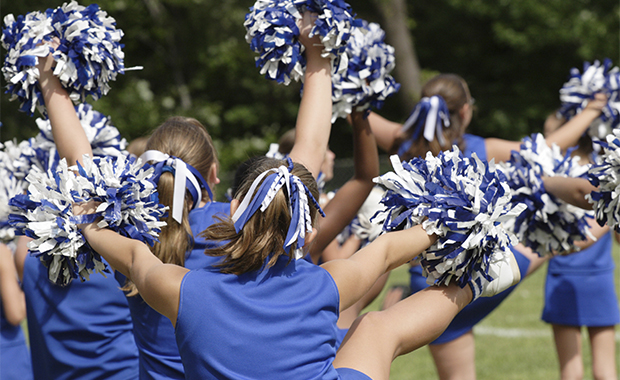
Post-Workout Recovery Tips for Cheerleaders and Gymnasts

Post-Workout Recovery Tips for Cheerleaders and Gymnasts

This article originally appeared on BetterBraces.com.


Practice does help make you better. But if you want to tumble stronger, jump higher, and kick better, then you’ve got to focus on your recovery just as much as practice.


Play Video


Play


Loaded: 0%


Progress: 0%


Remaining Time -0:00


This is a modal window.


Foreground --- White Black Red Green Blue Yellow Magenta Cyan --- Opaque Semi-Opaque


Background --- White Black Red Green Blue Yellow Magenta Cyan --- Opaque Semi-Transparent Transparent


Window --- White Black Red Green Blue Yellow Magenta Cyan --- Opaque Semi-Transparent Transparent


Font Size 50% 75% 100% 125% 150% 175% 200% 300% 400%


Text Edge Style None Raised Depressed Uniform Dropshadow


Font Family Default Monospace Serif Proportional Serif Monospace Sans-Serif Proportional Sans-Serif Casual Script Small Caps


Defaults Done


Just like any other sport, cheerleaders and gymnast need to take the time to practice, strength-train and stretch—this is especially important to increase flexibility. With so much pressure, bodyweight and demand place on the body during cheer and gymnastics, athletes need to also take part in a proper recovery program daily.


Post-workout recovery is more than just a cool down stretch. Post-workout recovery involves stretching, rolling, icing and more. It allows your body to repair the muscles that were worked during activity so they are healthy to go the next day.


Recovery Tips and Tools


Stretching

Stretching helps increase your range of motion, which decreases the resistance on your muscles during activity, improving your flexibility.


Electric Muscle Stimulation (EMS) Compex

Consider a Compex device to recover faster and pain-free. This small EMS device is like a self-massager. Small electronic pulses are delivered to your nerve fibers in order to create involuntary muscle contractions—bringing fresh oxygen and nutrients to your muscles to flush toxins out within 4 to 6 minutes. Simply put the small self-adhesive pads (electrodes) on the muscle area you’d like to work. Select recovery and let Compex help you get repair your muscles.


Ice Therapy (Hyperice)

Ice therapy can help reduce inflammation or joint pain that occurs post workout. You should apply ice after a workout or practice to keep swelling at a minimum. Hyperice keeps the ice in place while applying compression to the sore/worked area—reducing your risk for injury.


Self-massage

Studies suggest that post-workout massage reduces swelling, preventing sports-like injuries. And who doesn’t love a massage? Simply use a foam roller or small firm ball to roll out sore muscles from your practice. This simple practice flushes lactic acid out, reducing the next-day soreness.


Topical Pain Relief

Topical creams and gels can offer a little heat when muscles are tense, allowing your body to reduce stiffness. A tight muscle limits your range of motion, which is an open door to injury. Apply a small amount to your injured area to get the blood flow moving and ease tension.


Bracing Solutions

With a little compression and muscle support, braces can help take away chronic muscle pain. If you have nagging pains from repetitive wear and tear, look for a wrap that can allow you to stay moving without any limitations. A basic brace can support and reduce pain, giving you the confidence you need to jump, kick, flip and tumble.


Related Articles:


Original article and pictures take www.activekids.com site

вторник, 5 августа 2014 г.

Post-Workout Mistakes That Cause Weight Gain

Post-Workout Mistakes That Cause Weight Gain

Feeling like you hit the gym pretty regularly but aren't seeing results? One of these post-workout habits may be sabotaging your weight-loss results.


  1. You reward yourself too much: The workout's done, the sweaty clothes are off, and you've been eyeing that piece of cake for a while. While occasional indulgences are smart — and necessary — using your workout as an excuse to help yourself to junk food is not going to get you the results you're after, so don't use the fact that you've just burned 300 calories as an excuse to indulge in twice that much.
  2. You skip the stretch: You may think of the cooldown as a waste of time, but regularly skipping your post-workout stretches will put you at risk for injuries that will sideline your weight-loss progress by keeping you out of the gym.
  3. You recover with a sports drink: Sugary sports drinks can replenish electrolytes, but if you've just finished a short workout, the extra calories are probably unnecessary. Save the sports drinks or coconut water for intense workouts lasting more than an hour or for workouts in hot weather.
  4. You use it as an excuse: Monday's boot-camp class was so hard, so you can be forgiven for nursing your sore muscles until the start of next week, right? Not the best idea if you want to see pounds dropping on the scale. Make sure you get at least 300 minutes of vigorous exercise every week in order to stay on the right weight-loss track.
  5. You wait too long to eat: Refueling soon after a workout is crucial because it's what helps you rebuild muscle after a workout. Since the more muscle mass you have, the higher your metabolism, make sure you fit a snack of carbs and protein into your post-workout ritual.
  6. You don't schedule the next one: You should pat yourself on the back for finishing this workout, but don't let your self-congratulations get in the way of scheduling your next workout. You'll only see progress if you make exercise a consistent part of your week.

Image Source: POPSUGAR Photography


Original article and pictures take media1.popsugar-assets.com site