
FITBODY NEWS
Magazine
Original article and pictures take julielohre.com site
FITBODY NEWS
Magazine


Imagine having a personal trainer to guide you anywhere and anytime you want to do a quick workout. With 50 illustrated no-equipment exercises and 6 simple circuit workouts, the Exercise Cards give you just that, in a beautiful compact format.
Featured in SHAPE and Elle among others, the Exercise Cards is a simple convenient way to work out anywhere anytime, without any equipment. All you need is 15-20 minutes and your favorite place to exercise - your living room, the park or the gym - to get an intense workout that will help you get and stay in shape.
Based on the highly effective high intensity interval training (HIIT) exercise method, Exercise Cards contain 58 professionally-designed plastic cards that add up to a comprehensive training suite:
In your bag, purse or pocket, you can take your Exercise Cards deck everywhere life takes you - business trips, vacation or just a trip to the park!
Clear and accurate illustrations
Each exercise card is professionally illustrated to show correct form and movement so you don't have to remember the exercises. Need more guidance? Targeted muscles and written instructions are on the back.
Workout plans included
If you are just getting started or want guidance, included are 6 easy-to-follow workout routines adaptable to all fitness levels
Limitless routine combinations
Never get bored! Shuffle the deck and build unlimited custom workouts with your favorite exercises.
Cards as tough as you are
Made of high quality plastic, the Exercise Cards keep their shape, don't tear and you can wipe them if soiled - so your deck will stay in top shape...like you!
Dimensions: 3.75" x 2.5" x 0.75"
Women's and Men's versions of the Exercise Cards differ in one gender-specific workout out of the six included and the illustrations; the exercises are the same.
�� Perfect gift to motivate your friends for a healthy 2016!
Get 10% OFF two or more items with code SAVE10

We all know the happy muscle pain called sore. The ache you feel after exercising, known as “good pain”. A virtuous reminder that you’re working hard to keep your body in shape. For every one of you, that kills the gym, the sore is one prove that you’ve done it right. But the problem is that even “good pain” is uncomfortable and can interfere with your everyday activities, especially, when it lasts longer. So, because of that, I decided to show you some great home remedies, that will help you to relieve the muscle pain. Also, not only that these effective ways will relieve the muscle pain, also, they will be flattering to your muscles. So, fit girls, get ready!

The cold has analgesic, pain-relieving, properties that will help soothe your aches. So, reach for an ice pack, and put it to the source of the pain, rather that are the legs, or the arms. Later, apply heat to your muscles to warm them up. You can apply some cream that heats, or something else. There are also creams, that are known as ice and cold, and they warm your muscles, and then ice cold you.

|
A warm shower or bath also triggers the muscle to relax, which can be great for tension knotted shoulders or muscles tight from overuse. So take a long lasting bath, 20-30 minutes and relax your muscles. It will help you, to relieve the pain for sure.

Massage set off a series of molecular events in muscles that helped reverse discomfort related to exercise. It also increased levels of proteins that signal the muscles produce more mitochondria, the cell structures that produce energy and help muscles recover from activity. So, what are you waiting for?!

A number of essential oils and essential oil blends may be helpful for relieving muscle pain. For muscle cramps, it is recommended lemongrass with peppermint or marjoram. For muscle tension, you can try marjoram, peppermint, helichrysum or lavender.

Drinking 500 ml, 2 cups of milk or chocolate milk, can help your muscle sore. It contains a lot of calcium, and it will relax your muscles. So, drink a cup of milk, and take a rest.

With your 2 cups of milk, you might want to take oral magnesium. Low levels of magnesium in the body can lead to general muscle aches and muscle cramps. So, you may want to consider taking the magnesium as a supplement.

After your run, your legs are probably in need of a good stretch. But it's not all quads, hamstrings, and glutes. Don't forget these areas when stretching after your jog.
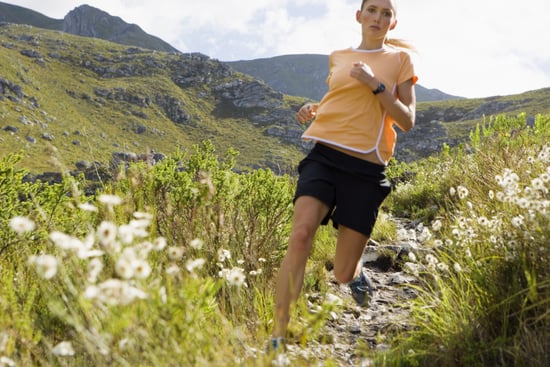
Hip flexors: Combat all that forward propelling (and desk sitting) with stretches that open up and loosen those all-important hip flexors. Tight hip flexors can lead to back pain and a limited range of motion, so make sure you incorporate some of these hip flexor stretches into your postrun routine.
IT band: Regular runners know that stretching your iliotibial (IT) band is very important, but if you've never had problems, it's easy to neglect the tendon that runs down the outer side of your leg. Prevent painful IT and knee problems before they happen by keeping your body loose with this standing IT band stretch.
Calves: Calves have the luxury of being among some of the most-used muscles in your body, but many people ignore them after a run, which can lead to an overly tight and inflexible pair. After you finish a run, find a curb or wall and do one of these seven calf stretches regularly.
Toe stretches: Your lower digits can use some attention too. Keep your toes happy and help prevent plantar fasciitis by doing a minute of toe scrunches after your run (or regularly throughout your day).
Besides these often-neglected areas, there are several other important stretches you should be doing to ensure you keep your muscles strong and flexible and prevent injury. Try this postrun stretching sequence after your next jog, or incorporate this yoga sequence for runners into your routine.
Image Source: Thinkstock
← Use Arrows Keys →
It takes a lot of time and energy to get a workout in, especially if you have a busy schedule. Don't make these post-workout mistakes that may undo the good you've done — or worse, result in illness or injury.

Think of your workout as a meal. Your warm-up is your appetizer, the actual sweat session is your entree, and your cooldown is—wait... cooldown? "Most people skip stretching because they don't think it's important," says John Porcari, Ph.D., an exercise and sports science professor at the University of Wisconsin-La Crosse. "But gradually returning your body to its natural resting state is the best way to prevent cardiovascular and muscular mishaps."
So may we introduce to you: yoga for dessert. That's right, yoga—the age-old practice of controlling your breath, opening up your body, and quieting your mind—has become the cherry on top for boxing, indoor cycling, and boot camp. Trace it back to a growing emphasis on the mind-body connection and an increasing interest in restorative and recovery-enhancing techniques. In fact, instructors at buzzy niche studios (like NYC's Box + Flow and Studio 360) and big-name gyms (including Crunch) are replacing the standard quad-stretch-shoulder-roll quickie with 10 to 20 minutes of slow-flowing poses.
Smart thinking, since research shows that a single bout of yoga can reduce post-workout muscle soreness, thanks to improved flexibility. "Yoga gives your muscles a chance to relax and lengthen after they've been contracting throughout your workout, which should help you maintain range of motion even after intense exercise," explains Porcari. "It also helps lower your heart rate, so you can enter recovery mode faster." In other words, you'll be in better shape to max out your next workout, whatever it may be.
Of course, the mental benefits deserve a shout-out too. When you go-go-go during your session, then skedaddle, you don't get the full de-stressing perks of your hard work. "Exercise excites the nervous system, while a subdued yoga flow calms it," says Ryanne Cunningham, founder of Flow Yoga Studio in DePere, Wisconsin, and author of Yoga for Athletes. "That's crucial to finishing your workout feeling optimistic, peaceful, and inspired—and hopefully, a little more appreciative of what your body just did for you."
But there's more! Even if you aren't a yogi, it's practically impossible not to look forward to a wind-down when you've been pushing yourself for half an hour or more. "You might even find yourself cranking up your intensity just to 'earn the reward,'" says Cunningham.
She created a short and sweet sequence exclusively for WH that'll complement any strength or cardio program. You're in for a treat.
Yes, just 10 minutes! Directly after your workout, focus on slowing your breath bit by bit. Inhale for three seconds, hold for three, then exhale for three; add a count each round until you're inhaling, holding, and exhaling for six breaths. This gradually gets you from panting heavily to calm and focused. Then perform this flow in order, starting with your vinyasa and going back to it between every sequence. Repeat each sequence on the other side, vinyasa included, until you've made it to your final sequence, then repeat the entire flow twice. Optional: End with a minute or two in savasana (lying on your back).

Start in a pushup position, hands under your shoulders (a). Keeping your core engaged and elbows close to your sides, bend your elbows to slowly lower your body in one straight line until your arms form a 90-degree angle to the floor (b). Roll over your toes and straighten your arms to draw your chest forward, keeping your hips and legs a few inches off the ground (c). Plant your toes and push your hips up and back to finish in downward dog (d).

From downward dog, place your right foot between your hands. Ground your heels and lift up to stand. Bend your right knee and angle your left foot to face the top left corner of your mat. Extend your arms in opposite directions (a). Lift your right arm and bend your elbow to rest your palm on your upper back. Place your left palm on your right elbow. Push your hips slightly forward to feel a stretch in your right side (b).
Extend your arms and bend your right knee to return to warrior II. Push your right foot into the mat as you straighten your right leg. Shift both hips back as you tilt your upper body forward and reach for the front of the room with your right hand. Rest your right hand on your shin or ankle and reach your left arm toward the ceiling.
This yoga sequence for everyday athletes is great for fending off injury, improving flexiblity, and building strength:

From downward dog, lift your right leg up and step your right foot behind your right hand. Step your left foot in about a foot, feet staggered. Lift up to standing, keeping your hips facing forward. Touch your palms together behind your back, and slowly fold over your right leg (a). Place your left hand to the left of your right foot, then raise your right arm directly up as you twist your torso toward the ceiling, pushing your hips back (b).

From downward dog, lift your right leg, then bend your right knee to open up your hip. Bring your right leg forward and place your right knee down on the mat behind your right wrist. Gently guide your right foot a little closer to your left wrist. Lengthen your left leg so it's in a straight line directly behind you, and uncurl your toes. Keeping your hips square, press your fingertips into the floor. (Optional: Lower onto your forearms to deepen the pose.)
Swing your left leg around and plant your left foot on the mat on the outside of your right thigh. Place your left hand on the mat behind your hips and hook your right elbow on the outside of your left knee. Keeping your spine tall, gently twist toward the left, using your elbow to draw your knee back and twist a little deeper.
(Torch fat, get fit, and look and feel great with Women's Health's All in 18 DVD!)

From downward dog, lower onto your knees and come to a seat on your mat. Lower onto your back and extend your arms, palms down, by your sides. Slowly lift your legs up and behind you until your toes touch the floor (a). Plant your toes into the floor, then walk your elbows in closer together and place your hands on your middle back. Raise one leg toward the ceiling, then the other. Walk your hands along your back toward your shoulder blades to keep the weight off your neck (b).
Lower your legs to the floor behind you (back into plow) and place both hands down onto the mat. Slowly bring both legs back onto the mat; extend your legs and bring them together. Come to a seat and flex your feet. Reach your arms overhead, then fold forward over your legs, reaching for both feet.
