пятница, 28 сентября 2012 г.

Gym Rat or Not, Don't Forget to Do This at the Gym

Gym Rat or Not, Don't Forget to Do This at the Gym

Wouldn't it be nice to end every active week with an intense deep-tissue massage to help ease your muscles? But since we can't always spring for a trip to the spa, here's what we can do — use the foam roll at the gym.
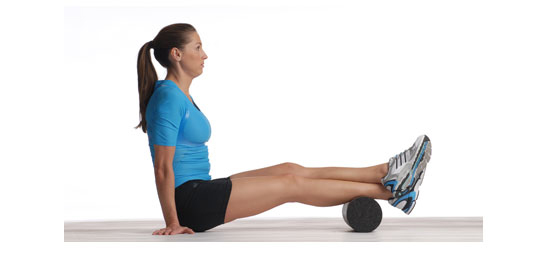


You may have seen people in the gym foam rolling and think it's just for serious athletes or gym rats, but that's not the case. But there are many reasons why massaging out the tight knots in muscles is an important part of your workout routine, even if you already stretch regularly. Why? Because no matter how much you stretch, the build up of fascia that creates muscle knots that won't go away, which can lead to many different problems.


I've been consistently seeing my trainer for a few weeks, and the aftermath is clear: not only am I working new sets of muscles (meaning new ways of being sore) but I'm also realizing how much more I need to be foam rolling. My trainer, Tim Rich at Crunch Gym, says that everyone, avid athlete or not, should be using those long spongy cylinders daily. Read on for why and how you should be foam rolling every day.


  • Helps prevent common injuries. One of the most important reasons for a regular foam-rolling routine is to prevent those often too common exercise-related injuries. Many runners, for example, become painfully well acquainted with their IT band if they don't take care to massage the band of tissue. IT band syndrome and other similar flare-ups can be caused by too-tight muscles. Foam rolling every day ensures you are massaging away fascia buildup in your muscles, in order to help prevent those areas from becoming injury trigger points.
  • Helps you de-stress. Had a hard day? Foam roll your worries away. Digging for those knots "releases tension that is built up in the connective tissue to keep you less stressed," says Tim. He recommends a simple all-over body routine in order to combat the "desk posture blues" that happen from sitting too long in the office.
  • Keeps you flexible. Building up your flexibility is key for any fitness routine, Tim says, which means you constantly should be stretching and doing exercises that'll help you gain flexibility. Stretches that lengthen your hip flexors, for example, can help combat tightness from sitting as well as lower back pain.

The more regularly you use a foam roll on your tight muscles, the less painful it'll be. Ready to roll? Here are five important stretches you should be doing with a foam roll, and a video on how to foam roll your quads and IT band for elongated, flexible, and injury-free thighs and happy knees.


Original article and pictures take media1.popsugar-assets.com site

вторник, 11 сентября 2012 г.

Great Post-Exercise Snacks

Great Post-Exercise Snacks
By: Debbie Siebers

After a hard workout, you've probably used up all or a lot of your body's stored carbohydrates. To replenish them quickly, so that your body can recover in time for your next workout, it's important to enjoy a recovery snack within 30 minutes of your workout. Your ideal recovery snack should contain 1/2 gram of carbohydrates per pound of your body weight, and at least 10 grams of protein.

A few great recovery snacks:

Original article and pictures take trainingwithnate.blogspot.com site

понедельник, 3 сентября 2012 г.

Glutes Workout With Resistance Bands

Glutes Workout With Resistance Bands
Use a band to add intensity to your glute workout.

Resistance bands -- known for their effectiveness, affordability and versatility -- are a fantastic tool for boosting strength in your buttocks and hips. Whether you're working out in the gym, at home or on the road, band use is a perfect complement to your glute training program. For safety purposes, use a band based on your current fitness level and check the band for tears before using it. Round off your routine with a glute stretch to reduce post-workout soreness.


Leg Lifts to the Rear


To perform this exercise, stand 2 to 3 feet from a wall. Place your hands on the wall for support after looping the band around your thighs and tying the ends of the band together. Position the band just above your knees and stand with your feet comfortably set apart. Straighten your back, align your head over your spine and engage your abdominal muscles as you extend your right leg behind you. Hinge your torso forward slightly and lift your right leg upward against the band’s resistance. Raise the leg as far as possible without arching your lower back. Your left knee should remain slightly bent. Lower the right leg to its initial position, and then repeat the leg lift 10 to 15 times before switching to the left leg. For greater resistance, position the band around your ankles.


Squats


Intensify the outcome of traditional squats by working with a band. Grasp one end of the band in each hand and stand with your feet shoulder-width apart on top of the middle portion of the band. Straighten your back, engage your abdominal muscles and direct your toes forward. Draw your hands up to your hips or shoulders, taking care not to arch your lower back. Bend your knees and slowly lower your buttocks into a squat with your knees over your insteps. Maintain a straight spine and allow your glutes to jut backward. Ideally, your thighs will be almost parallel to the floor, but don’t allow your knees to extend beyond your toes. Slowly rise to your initial position, and then repeat, completing 10 to 15 squats. To increase the challenge, add a lateral leg lift after you rise from the squat.


Bridge


Tie a resistance band around your thighs and lie on your back with your knees bent. Flex your feet and rest your heels on a raised surface, such as an exercise step or low stair. Your feet should be slightly more than hip-width apart. Extend your arms along your sides with your palms pressing into the floor. Open your thighs and knees as much as possible, working against the band’s resistance. Dig your heels into the raised surface as you raise your hips into a “bridge” position with your shoulders on the floor and your neck relaxed. Hold the raised position for 5 seconds, and then slowly release back to the floor. Repeat 10 to 15 times.


Lateral Shuffle


With the band tied around your thighs, stand with your feet slightly wider than hip-width apart and your toes directed forward. Clasp your hands together in front of your chest. Tighten your abdominal muscles and sit into a squat with your thighs almost parallel to the floor and your knees over your insteps. Maintain the squat position while stepping to the right with your right foot. Draw your left foot toward your right foot. Repeat the exercise, stepping five times to your right, and then reverse the direction of your shuffle, taking five steps to your left. Keep your shoulders and hips square throughout the exercise.


Judy Fisk has been writing professionally since 2011, specializing in fitness, recreation, culture and the arts. A certified fitness instructor with decades of dance training, she has taught older adults, teens and kids. She has written educational and fundraising material for several non-profit organizations and her work has appeared in numerous major online publications. Fisk holds a Bachelor of Arts in public and international affairs from Princeton University.


MORE MUST-CLICKS:


Original article and pictures take woman.thenest.com site

четверг, 16 августа 2012 г.

Get the app today!

Get the app today!
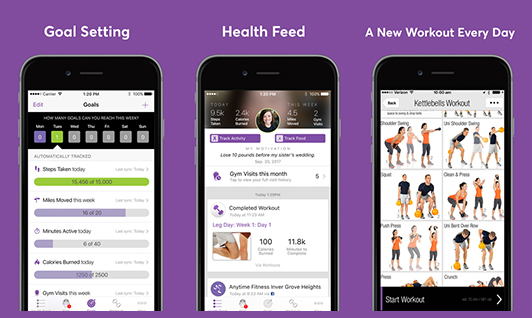
App features goal setting, health feed, a new workout every day
iPhone App

Fuel your confidence!


The Anytime Fitness® App helps our members Get to a Healthier Place® by providing easy access to over 1,100 workout plans, goal setting to stay on track and the ability to monitor their progress, both inside and outside the gym.


Available for iOS and Android Devices


Stay motivated and on-track to achieve more.


Over 1,100+ workout plans at your fingertips will keep you challenged and focused.


With a few quick taps, you can update your stats and monitor progress.


The Anytime Fitness App also allows you to:


  • View membership status
  • Update personal info
  • View gym history
  • View, confirm & cancel appointments
  • Find gym locations
  • View gym offers & promotions

Questions?


©2017 Anytime Fitness, LLC. All Anytime Fitness App features and functionality may not be available to individuals who are not members of a participating Anytime Fitness club. Anytime Fitness clubs are independently owned and operated and participation may vary. See your local club for details.


Original article and pictures take www.anytimefitness.com site

пятница, 10 августа 2012 г.

Get Started

Get Started

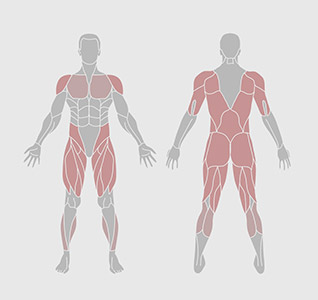
DAREBEE Workout: What it Works

DAREBEE is a non-profit free, ad-free and product placement free global fitness resource. DAREBEE is supported exclusively via user donations. Disclaimer & Privacy Policy. © 2018 DAREBEE | formerly NeilaRey.com | All Rights Reserved.

This website uses Cookies. All of the materials on this website are unique, copyrighted and are exclusive to darebee.com. Contact DAREBEE administration


Original article and pictures take darebee.com site

пятница, 27 июля 2012 г.

Get Back on Your Feet Quickly Post-Workout

Get Back on Your Feet Quickly Post-Workout


We've heard about the importance of proper workout footwear from medical professionals, magazines, friends, family and so many other sources. We get it! Running and walking require specially formulated shoes, while cross-trainers are more appropriate for the gym or a fitness class. But what happens to our feet after exercise?


As it turns out, there are some steps we should all be taking to ensure that our feet remain in tip-top shape after a workout. We asked podiatrist Dr. Jackie Sutera and doctor of physical therapy Brian Hoke, both of the Vionic Innovation Lab, for some insight into post-workout foot recovery. Here are their simple (yet indispensable) tips.


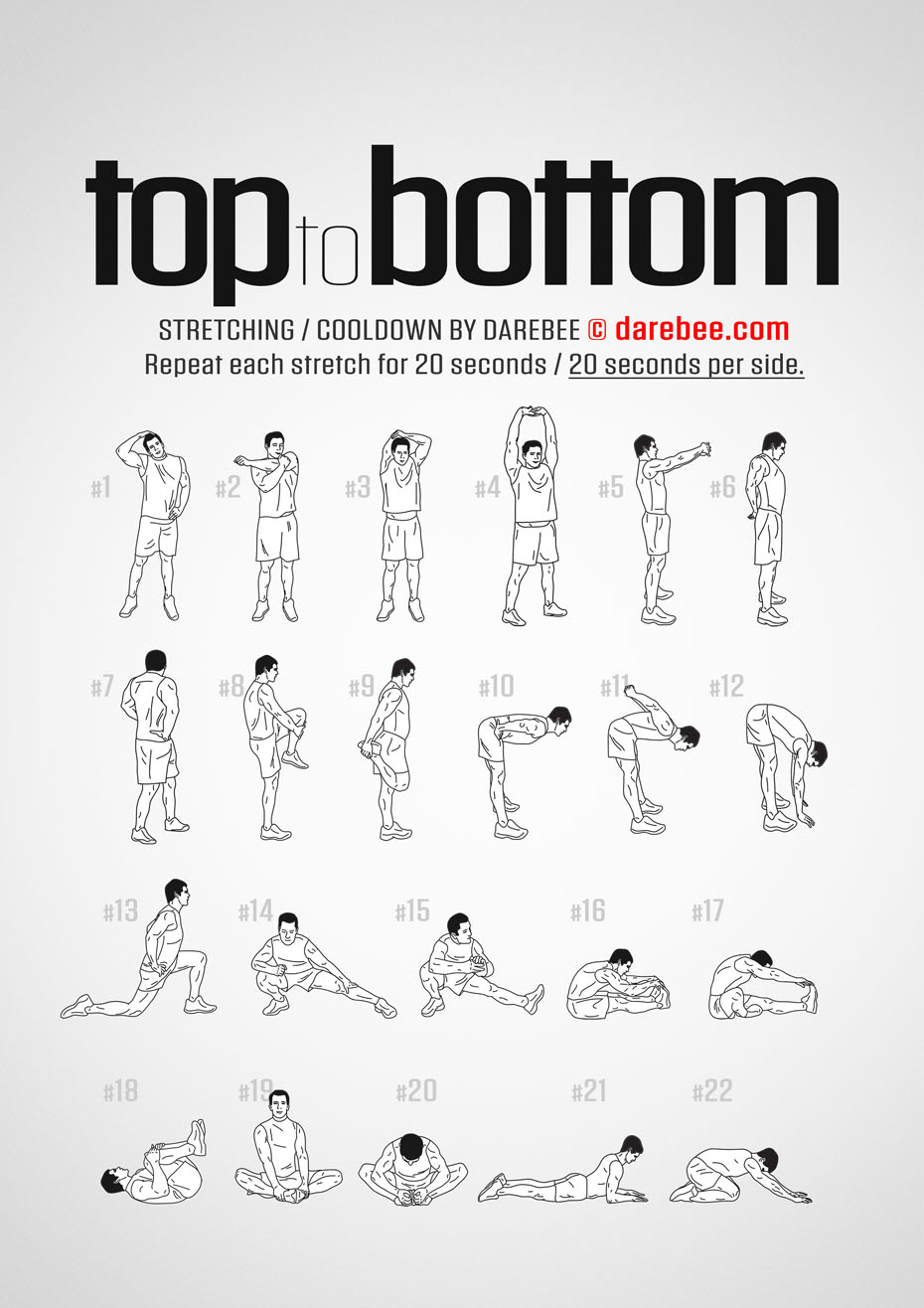
Cooldown stretching–here’s what to do after a workout to salvage your soles:


  • Massage the soles of your feet by running the arch of your foot over a golf ball or other physical therapy ball on the floor to stretch out the fascia (i.e., the ligament that runs from the heel of your foot to your toes and can become inflamed, causing plantar fasciitis).
  • In addition to stretching the feet, loosening your calf muscles is a must, Hoke tells Shape.com. "A common mistake is to allow the arches to fall while stretching the calf muscle. It causes stress that can aggravate foot problems, like heel pain and plantar fasciitis."

Address these common post-workout foot issues:


  • Blisters: Pad, bandage and avoid the blister until it heals. If you must, clean a safety pin with alcohol and make a small hole to drain it, being careful not to pull off skin. Then, apply an antibiotic ointment to the area and bandage it.
  • Calluses: Lightly buff the affected area with a foot file and then cover with a foot cream that contains salicylic acid, lactic acid or urea.
  • Athlete's foot: Dry the feet very well after showering, and use medicated foot powder and topical anti-fungal ointments as directed.
  • Heel Pain: Ice feet after working out and wear shoes with arch support even around the house. Don't go barefoot, as hard surfaces like wood or tile will exacerbate the pain.


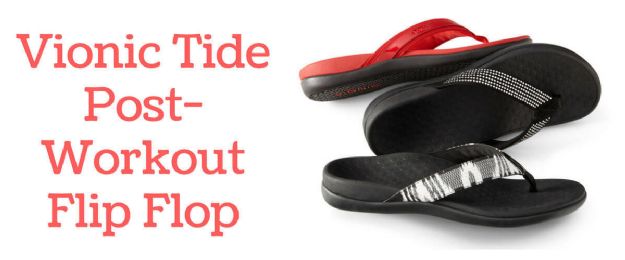
Looking for a pair of post-recovery sandals? Our favorite Vionic Tide flip-flop is a favorite for a reason: The pronounced arch support and deep heel cup provide just the right amount of support and is proven to help alleviate heel pain.* And with over 20 colors and patterns to choose from, you’re sure to find your perfect pair.


About Vionic Footwear

Developed by Phillip Vasyli, renowned Australian podiatrist and founder of Orthaheel® Technology, all Vionic shoes help restore natural foot function and relieve heel pain, promoting a more active lifestyle. Vionic’s footwear and orthotic inserts are also endorsed by noted integrative medicine expert Dr. Andrew Weil. For additional information about Vionic, please visit VionicShoes.com.


*Based on a peer-reviewed clinical study partially funded by Vionic on people experiencing moderate, non-traumatic heel pain.


Original article and pictures take www.sparkpeople.com site