вторник, 24 февраля 2015 г.

Seven Yoga Postures To Do Post-Workout

Seven Yoga Postures To Do Post-Workout

You just rocked a cardio workout (or maybe some strength training), but you’re not quite done yet. The post workout cool down and stretching are just as important as the workout itself. Here are seven yoga postures that stretch your tired muscles, calm your mind, and if done regularly, can help increase flexibility and mobility.


1. Legs up the wall


legs-up-the-wall1

legs-up-the-wall-2

This is hands-down my favorite post-workout yoga posture. Not only does it boost circulation to help you recover faster, this restorative posture can also quiet the mind. Lay on your back, shimmy your bum close to a wall and rest your legs straight up on the wall.


Another option: Lay on your back and place a yoga strap around the balls of your feet. Hold for up to 15 minutes.


2. Knee-to-chest stretch


knee-to-chest-stretch

Knee-to-chest stretch is a great all-around stretch for your hamstrings, glutes, and lower back. Lay on your back with your legs straight; bend one leg up toward your chest. Hug it close to your chest while pushing your back to the floor; hold for 20 seconds. Repeat on the other side.


3. Forward bend


forward-bend-DOUBLE

This juicy stretch not only feels oh-so-good on the hamstrings, it also lengthens the spine. Fold forward and dangle your arms toward the floor, bending your legs as much as you need to.


Modification: Interlace your hands behind your back; as you bend forward, they’ll rise over your head.


4. Runner’s lunge


RUNNER-S-LUNGE

Runner’s lunge is another excellent hamstring, hip, and quad stretch. From a kneeling position, place one foot forward. Exhale as you lean forward into the lunge, keeping your back straight and core tight. Hold for one minute, and then repeat on the other side.


5. Wheel


wheel

This posture targets your quads, shoulders, and neck. Lay on your back with your knees bent and feet flat on the floor near your butt. Clasp your hands under your pelvis, bringing your shoulder blades close together, and lift your hips off the floor. Hold for 30 seconds.


6. Plow


PLOW

Plow pose is a great back stretch. Lay on your back and lift your legs toward the ceiling, placing your hands on your lower back for support. Keeping your legs straight, lower them toward your face while resting your arms flat on the floor. Hold for one minute.


7. Sphinx


SPHINX

And, on the flip side, sphinx is a great abdominal stretch. Lay on your stomach with your elbows under your shoulders. Slowly push up, so your forearms are resting on the floor. Hold for 30-60 seconds.


Conal

Original article and pictures take blog.anytimefitness.com site

вторник, 3 февраля 2015 г.

See more of Health-Fans on Facebook

See more of Health-Fans on Facebook

'Having an ideal height is the wish of many people. Here are 19 popular tips to create a healthy life and better height.'


19 Simple Tips To Increase Height Naturally Available On Top Simple tips to increase height naturally are a new article that reveals 19 out of the best ways to help you look taller. allremedies.com

Image may contain: text

See All

Image may contain: text

Image may contain: sky
Image may contain: one or more people, sky, cloud, ocean, mountain, outdoor, nature and text
See All


Original article and pictures take static.xx.fbcdn.net site

пятница, 30 января 2015 г.

Sean's Post Workout Stretch Routine - 8 Min Yoga Flexibility Training Exercises #flexibilitytraining

Sean's Post Workout Stretch Routine - 8 Min Yoga Flexibility Training Exercises #flexibilitytraining

These are a bunch of yoga flexibility stretches which I do after my full personal workouts. I change it up frequently and so should you. Share this routine with your workout buddies and reap the benefits of post workout stretching including: faster recovery, more flexibility, better sleep and much more.


✔️Order "Pilates for Athletes" → http://amzn.to/1VW3K46

✔️Order "Power Yoga for Athletes" → http://amzn.to/244KLt7


✔️Sign up for your FREE 7 day trial of "Sean's Vault": http://www.SeanVigueFitness.vhx.tv


✔️Download the free Sean Vigue Fitness App today!

Apple: http://apple.co/1MuajRY

Android: http://bit.ly/1OoErol


Train w/ me EVERY DAMN DAY!

http://www.seanviguefitness.vhx.tv


~ FACEBOOK: http://www.facebook.com/seanvigue

~ TWITTER: http://www.twitter.com/seanviguefit

~ PINTEREST: http://www.pinterest.com/seanviguefit

~ NEWSLETTER: http://www.seanviguefitness.com

~ BLOG: http://www.seanviguefitness.com/blog


Sean Vigue is a certified Pilates, Yoga, Spinning, Nutrition, and Personal Training instructor (over 5000 classes taught), winner 'Best Male Workout' (Pilates for Men) by Pilates Style magazine, Master Core Specialist, TV and Film star, and professional singer/actor having appeared in over 70 opera, musical theater, and non-musical productions. He's a member of Actor's Equity and is sometimes caught singing arias while doing Planks.


Original article and pictures take s.ytimg.com site

воскресенье, 11 января 2015 г.

Runners, Please Don't Skip This After Your Next Run!

Runners, Please Don't Skip This After Your Next Run!
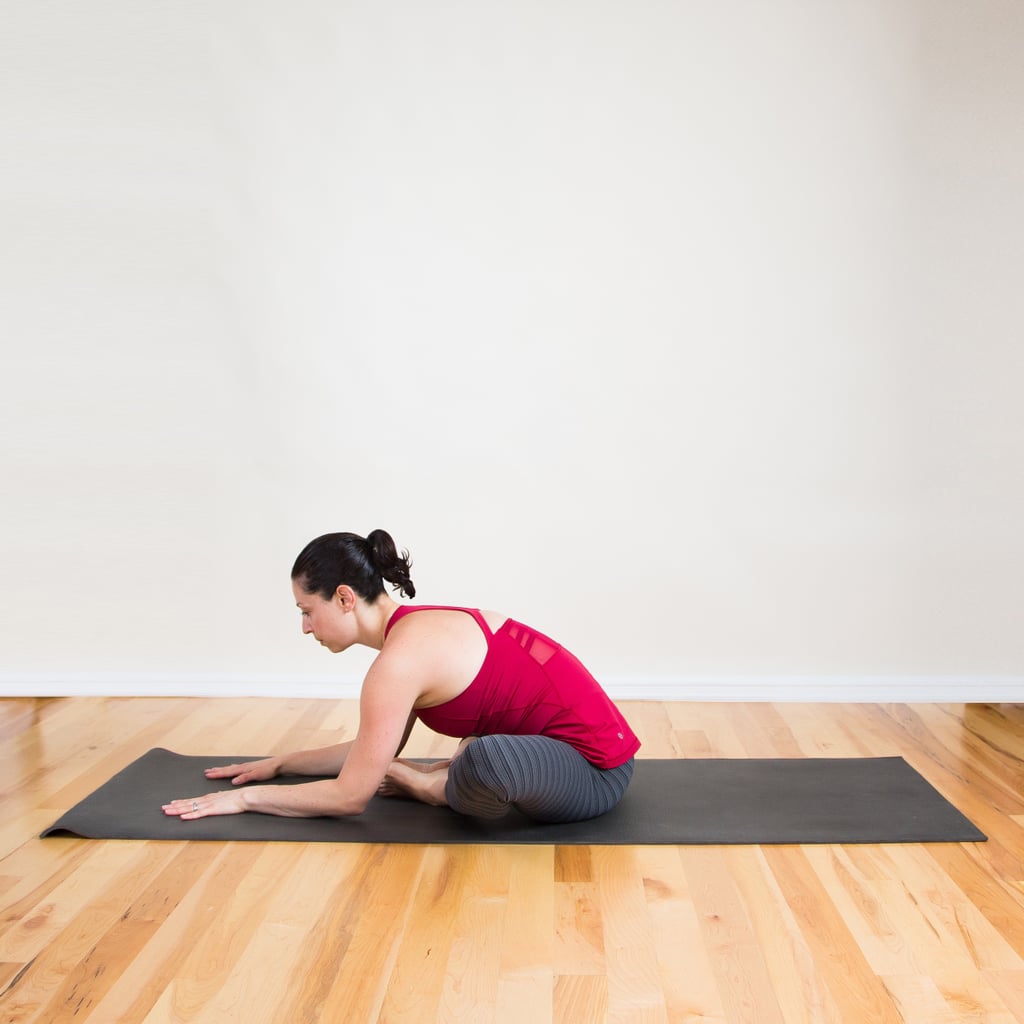
Butterfly

Targets: hips and lower back


Sit on the ground, bend your knees, and bring the soles of your feet together. Fold forward to increase the intensity, and hold for 30 seconds.


Original article and pictures take media1.popsugar-assets.com site

среда, 24 декабря 2014 г.

Runners can benefit from using foam rollers

Runners can benefit from using foam rollers

Walk into any gym and among the rows of dumbbells, stability balls, and resistance bands you may find long, cylindrical pieces of foam. While they may seem odd and out of place, these pieces of foam, called foam rollers, provide a valuable service to runners and athletes alike.


Foam rollers are a tool that can help reduce knots in muscle tissue that, when ignored, lead to altered proprioception and muscular imbalance, which then lead to injury.


EarlsFoamRoller
Photo courtesy of healthynomics.co.uk

What is SMR?


Foam rollers are used in self-myofascial release (SMR). SMR is a stretching technique that focuses on the neural and fascial systems of the body. The fascia is a tissue that surrounds and separates muscle tissue (Clark, M.A. 2008). When the fascia becomes tight and develops knots or adhesions, SMR uses a gentle force to help relax the area and loosen knots. The tightness in the fascia cannot be relaxed through static stretching alone, which is why foam rolling is necessary.


Muscle imbalances in runners


Runners place continued stress on specific muscle groups—hamstrings, calves, quads, glutes—over long periods of time. During this time, continued overuse can create tightness and distortion in muscle tissue because certain muscle groups become overused and others become underdeveloped. This process is exacerbated when the body compensates for primary muscles and uses secondary muscles to do the job instead, which is called synergistic dominance. Distortion patterns in muscles can be caused by overuse of certain muscle groups, lack of flexibility or core strength, or poor training technique (in runners, poor form).


It is important to note that most people accrue distortion patterns from everyday living. Sitting for long periods can shorten hip flexors, and working at a computer or driving can cause the shoulders to roll forward and slump, tightening the pectoral muscles. Running with these postural distortions can lead to continued muscular imbalances and frequent, cumulative injuries.


When should you foam roll?


Foam rolling has many benefits, especially for runners. Using the foam roller loosens knots, which increase flexibility in tight areas. This in turn causes muscles to begin to activate properly, allowing for proper muscle recruitment, which can lessen injuries and increase performance.


Unlike static stretching, where studies conflict on whether it is useful, foam rolling can be done before and after a workout and is definitely beneficial for runners and athletes. Ideally, foam rolling should be done before a workout in order to loosen knots and stimulate proper muscle recruitment for the workout.


How to foam roll


You can use a foam roller on almost any part of the body, but for most runners the areas of focus will be the legs. In order for SMR to be effective, you must find a tender spot and hold pressure on that spot for at least 20 seconds. This allows time for the tight spot to begin to relax. Over time, the tightness you initially feel will lessen as your knots release.


For proper foam rolling exercises, consult a personal trainer or a fitness professional. Make sure to consult your physician before beginning any new exercise program.


(Clark, M.A., Lucett, S.C., and Corn, R.J. (2008). "NASM Essentials of Personal Fitness Training". Lippincott, Williams & Wilkins: Baltimore, MD.) Chelsea Earls is a RRCA cert. running coach and NASM cert. personal trainer who works at Running Fit in Ann Arbor. She can be reached at chelsea@prfitnessa2.com


Comments


Sandy Castle


Mon, Jul 19, 2010 : 12:03 p.m.


As a deep tissue therapist I recommend foam rollers to my clients. They are easy to use and very effective. You can purchase an excellent quality foam roller at the Ann Arbor Institute of Massage Therapy on Jackson Plaza, near Jackson Rd. and Wagner Rd., in Ann Arbor for around $20. Here is an excellent website that explains foam rolling AND shows you how to do the actual rolling. http://sportsmedicine.about.com/od/flexibilityandstretching/ss/FoamRoller.htm


Mon, Jul 19, 2010 : 9:31 a.m.


I was introduced to foam rollers after my second knee surgery and I have to say that they might be the best tool out there to aid recovery. After four knee surgeries, my IT band is constantly tight and after only a few minutes a day with a foam roller, I have instant relief. Great article!


Original article and pictures take www.annarbor.com site